
Understanding how search engines work is essential for anyone wanting their website or online content to be discovered by many people. Search engines like Google, Bing, and others use complex processes to find, organize, and show users the most relevant results. This article covers the three main stages of search engines: crawling, indexing, and ranking. It also discusses factors that influence rankings, tips for optimization, recent algorithm updates, the impact of user behavior, and effective SEO strategies.

What Are Search Engines?
Search engines are powerful software systems designed to search the internet for content that matches a user’s query or question. Their goal is to provide useful, trustworthy, and relevant information as quickly as possible.
The Three Key Processes in How Search Engines Work
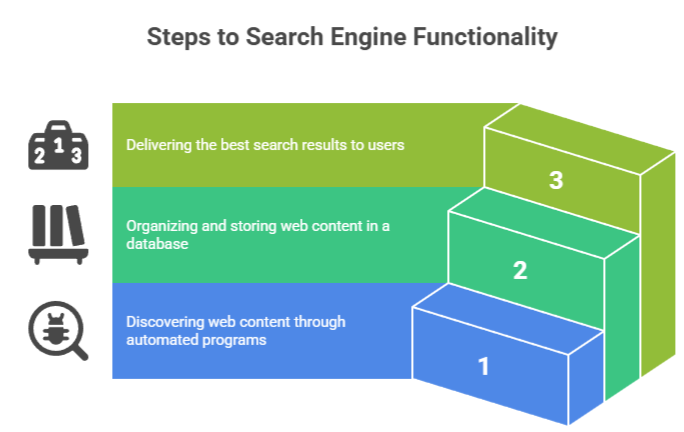
Crawling: Discovering Content on the Web
Crawling is the discovery phase. Search engines use automated programs called crawlers, spiders, or bots to explore websites. These crawlers visit web pages by following links from one page to another and gather data such as text, images, and videos.
- Crawlers start with a list of known web pages.
- They visit those pages and follow hyperlinks to find new ones.
- Crawling happens continuously to update information and discover newly published content.
Crawling is like a scout exploring a vast web landscape to map out every possible resource.
Indexing: Organizing and Storing the Content
After crawling, the collected web pages go through indexing. This means the search engine examines the content and saves it in a huge database known as the index.
- During indexing, search engines read and understand page content, keywords, meta tags, images with alt texts, and structured data.
- The index stores all this information, organizing it by topics and relevance.
- Not all crawled pages get indexed; pages with poor content or errors may be left out.
Indexing is like creating a giant, structured library catalog with all the books ready to be searched quickly.
Ranking: Delivering the Best Results
Ranking is the final step. The search engine looks through its database and uses complex algorithms to determine the most relevant and helpful pages when a user types a query.
- Ranking factors include content relevance, page quality, backlinks, site speed, mobile-friendliness, user experience, and more.
- Results are displayed on Search Engine Results Pages (SERPs), ranked from most to least relevant.
- Search engines regularly update algorithms to improve result quality.
The aim is to quickly provide users with the best answers.
Key Factors Influencing Search Engine Rankings
Several important factors determine how well a page ranks in search results:
Content quality and relevance:Informative, original, and well-structured content that matches user intent.
Backlinks: Trusted websites linking to your content enhance your authority.
Mobile usability:With mobile-first indexing, responsive design is critical.
Page speed: Faster-loading pages offer a better user experience.
User engagement:Metrics like click-through rate (CTR), bounce rate, and dwell time affect rankings.
Technical SEO: Proper use of meta tags, schema markup, sitemaps, and secure HTTPS.
Domain authority: Established sites typically rank higher.
Freshness: Frequently updating information can improve rankings for specific queries.
How Can Website Owners Optimize for Better Crawling and Indexing?
To enhance your website’s visibility, make sure to submit an XML sitemap, fix any broken links, use clean URLs, and steer clear of duplicate content. It’s also a good idea to add internal links, implement schema markup, and ensure your site is mobile-friendly and loads quickly. These steps will significantly improve your site’s crawling and indexing!
To make sure search engines efficiently crawl and index your website, follow these best practices:
- Establish internal linking and a clear, logical site structure.
- Submit an XML sitemap via Google Search Console.
- Use robots.txt correctly to give crawlers access to important pages.
- Avoid duplicate content and broken links.
- Ensure pages load quickly and are mobile-friendly.
- Use descriptive, keyword-rich meta titles and descriptions.
- Add structured data (schema) to help search engines understand content better.
- Regularly update content to show freshness.
Recent Updates Affecting Search Engine Algorithms
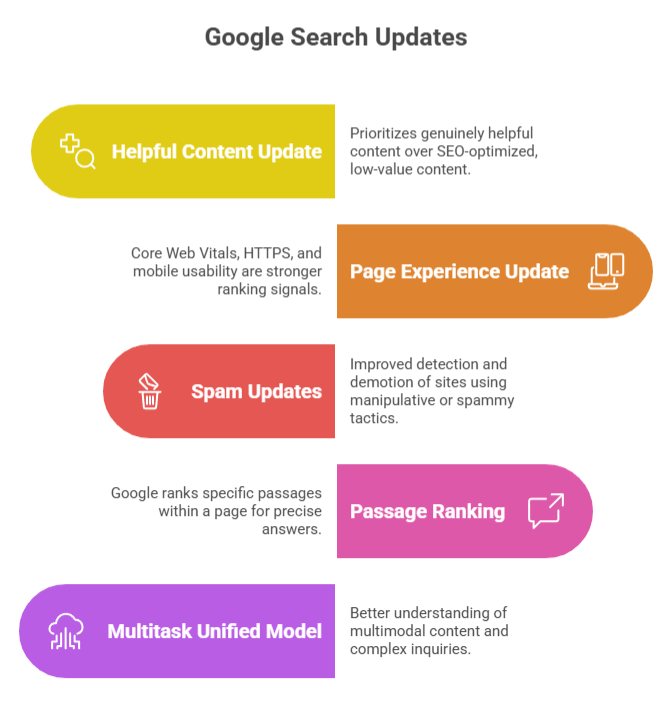
Search engines, especially Google, frequently update their algorithms to improve search quality and user experience. Some recent important updates include:
- Helpful Content Update:Prioritizes content that is genuinely helpful to users over SEO-optimized but low-value content.
- Page Experience Update:Factors like Core Web Vitals, HTTPS, and mobile usability have become stronger ranking signals.
- Spam Updates:Improved detection and demotion of sites using manipulative or spammy tactics.
- Passage Ranking:Google can rank specific passages within a page, helping more precise answers appear.
- Multitask Unified Model (MUM):Better understanding of multimodal content (text, graphics, and video) and complex inquiries.
Staying updated on these changes helps website owners refine their SEO strategies proactively.


Pingback: What Is SEO and How It Works – Powerful Guide for Beginners